



Why we millennials don’t understand all-inclusive hotels
While speaking with a friend, I heard one of the most typical complaints from millennials regarding entertainment objects. She said: “I feel a pang of guilt, because I bought this thing and I should use it more.” For example, having a console and feeling that we don’t play it often enough. Having a collection of graphic novels and feeling that we have to read everything, that money was spent on something.
And to a certain extent, that is right. The economic investment existed. We paid the price to have that thing, a price that, unless you are an heir, cost you time of your life (or money, same difference). We feel we must recover the lost time (money).
But it makes no sense.

You already paid the price for it. Consuming more or less won’t generate any return. In fact, if you force yourself to use something just because you bought it, the price of that thing tends to increase. Since besides the initial investment, money (or time, same difference), you are spending more of your time, increasing the life cost of the item.
But why does this happen?
Because we, millennials, don’t know how to differentiate availability from obligation. We operate our private lives with the same distorted logic as a tourist at an all-inclusive hotel buffet.
Faced with a plentiful table they have already paid for, the anxious tourist doesn’t ask “am I hungry?” but rather “what do I need to eat to make the daily rate worth it?”. They ignore their own satiety (pleasure) to satisfy an imaginary accounting (cost). The result is indigestion, not satisfaction.
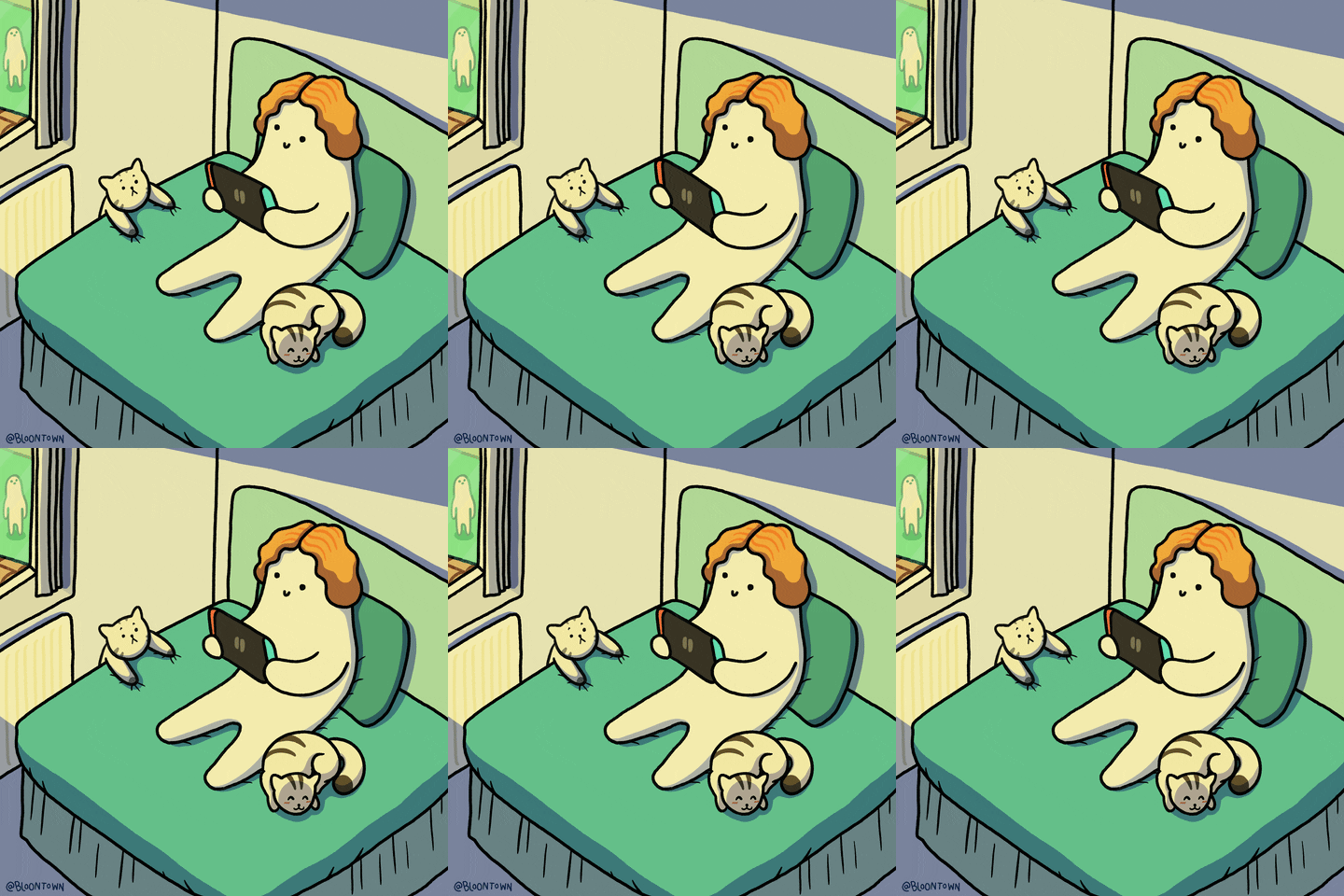
We bring this “All-Inclusive Paradox” into our homes. We look at the powered-off console or the book on the shelf not as leisure options available for when we feel like it (the true luxury), but as plates at the buffet that we are forced to swallow to not “lose money.”
We fail to understand that the true value of the all-inclusive (and the things we buy) isn’t in the maximization of consumption to the point of nausea, but in the peace of mind of access. You paid a high price precisely for the right not to have to do the math every time you want to play. And, fundamentally, you also paid for the right to leave the video game turned off without guilt.
So, relax. It’s okay to let the Kindle gather a little dust or keep the PS5 in standby. You aren’t “losing money,” you are exercising the right you bought: the right to have the option. The true luxury of this all-inclusive that is our home is precisely being able to choose not to consume. Don’t turn your leisure into another Excel spreadsheet to fill out. If the mood strikes, use it. If not, it’s paid for anyway. Be at peace.