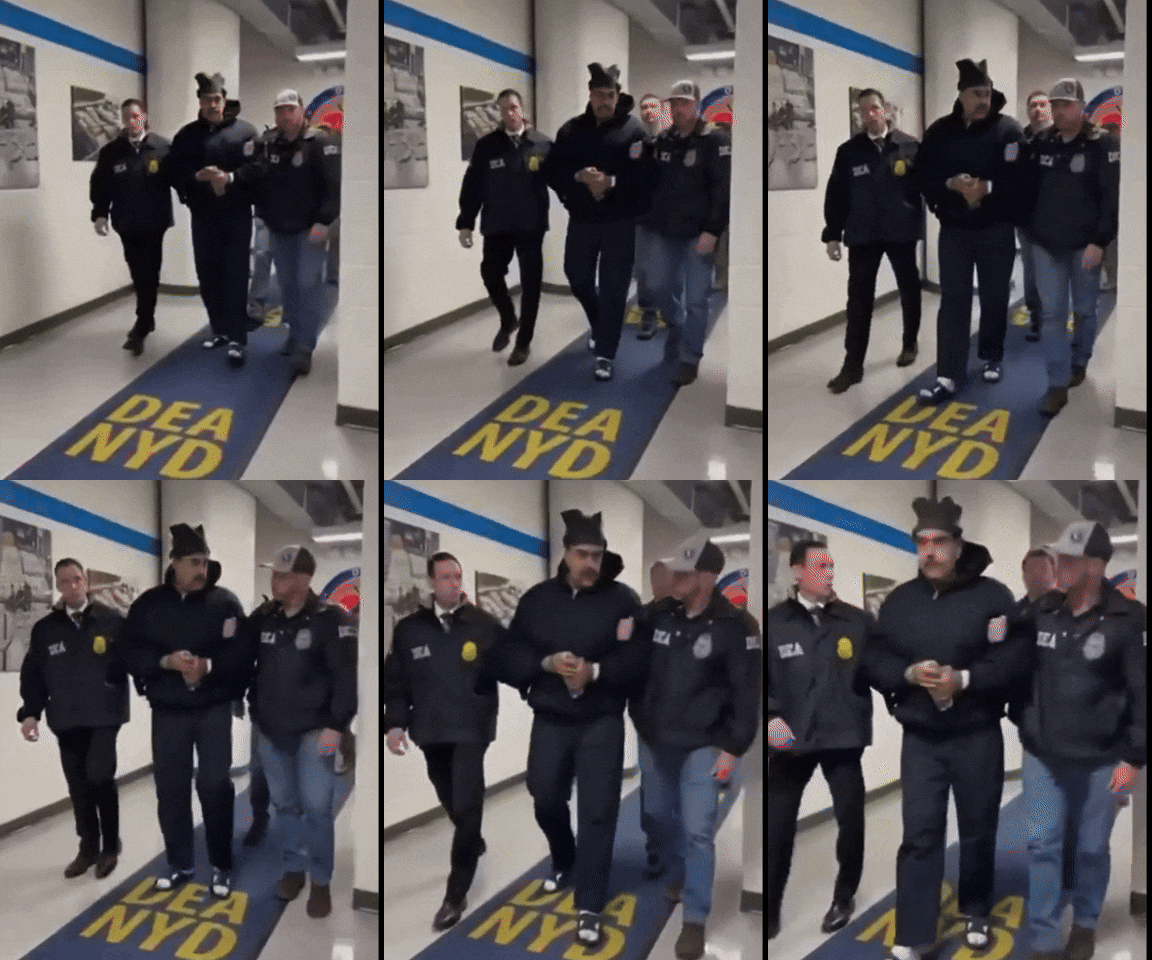


2026 is a year that, as has become the norm in recent years, got off to a turbulent start on the international stage. The US launched a lightning raid in Caracas and took away President Nicolás Maduro and his wife away to New York, acting unilaterally and using narco-terrorism as an excuse.
These days, the illegitimacy of the Venezuelan government and the need for change were hardly matters of international debate (after all, nearly 8 million people voluntarily leaving a country that isn’t even at war speaks for itself). But of course, a country where GDP plummeted by 86% in 8 years (2012–2020) isn’t something you see every day. Yet even with all those figures, it is hard to deny that the United States’ arbitrariness and egocentrism in acting, time and again, against a foreign nation without UN approval is worrying. Then Russia comes along in 2022 and invades Ukraine, and the arguments against it ring hollow and hypocritical, to say the least.
In a book that I read recently (I won’t mention the title to avoid a possible spoiler), Trump manages, with an act of bravado, to condemn all mankind to extinction, and the saddest part is that a situation like that nowadays doesn’t seem like fiction.
Unlike what the US did with the invasion of Iraq, at least this time the politicians have been upfront and admitted their interest in Venezuela’s immense oil reserves (the largest in the world) and haven’t tried to cover it all in the banner of freedom, given how worn out that old rhetoric has become.
If there is one thing that has characterized United States interventions in recent decades, it is an interest in instigating regime change in these countries, securing a leadership more favorable to their national interests. This was the case in Afghanistan, Iraq, Libya, Syria… even Yemen and Somalia, countries that are less internationally significant but which saw direct American involvement to secure the oil trade at any cost.
Not all of these countries possess oil reserves, one might argue; it is to combat terrorism, others might say. But when you analyze the fine print of the attacks and their consequences, you always find the black stain of shame. In Iraq, Saddam Hussein had nationalized oil assets, expelling Western companies (read: British and American); in Libya, Gaddafi was threatening to cut off crude oil to European allies (yes, ah, the good old days of transatlantic friendship…); and in Venezuela, Hugo Chávez did the same in 2007. It’s a good thing YPF stole the facilities from Spain and not the US, otherwise Cristina Kirchner would be trembling.
Ironically, the United States is currently the world’s largest crude oil producer, surpassing even the eternal Saudi Arabia, yet its need for raw materials seems infinite. The problem is the type of oil they can refine—heavy crude—which, surprise surprise, is not the kind they extract. So, the Texas facilities need Venezuelan oil, and with it flowing toward the ever-friendly Russia and China, obtaining it diplomatically was proving difficult.
We must not forget the other reasons for Trump to approve this operation. Because no, drug trafficking from Venezuela to the United States isn’t the problem; the country has never been the largest producer or exporter of drugs traveling north, that honored title belongs to its neighbors.
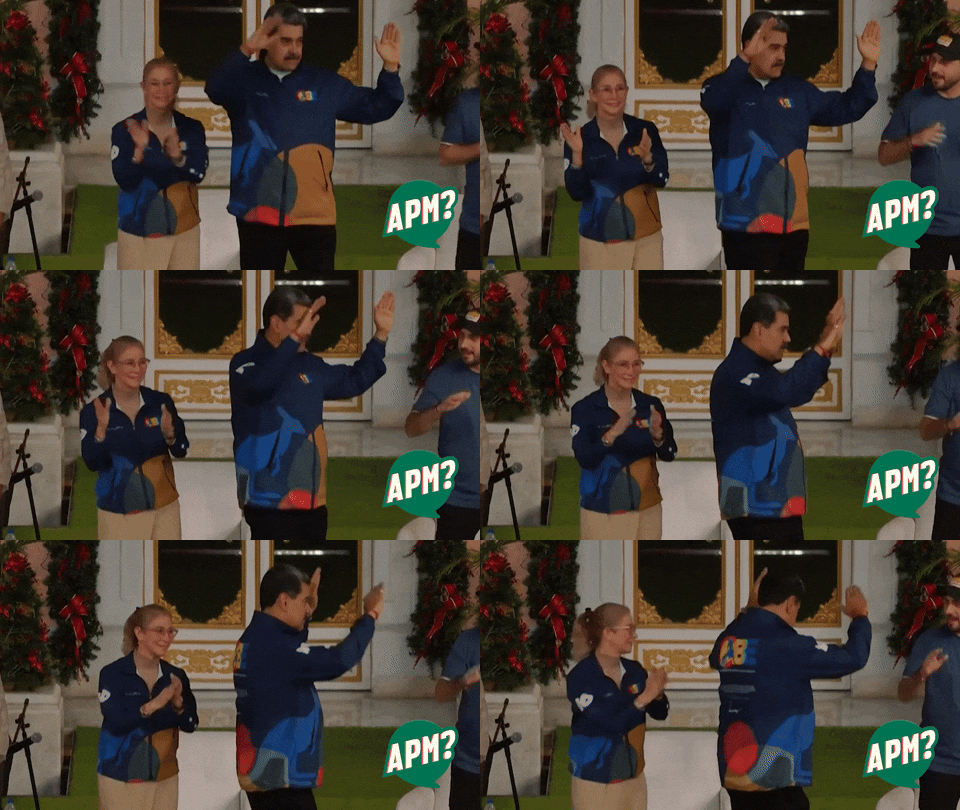
The first reason is the hated immigrants, currently more than a million in the Venezuelan case. Another reason would be international projection and the President’s ego; Trump wants to make it clear that he can do as he pleases in Latin America and that local governments must submit to his demands. In this context, I am sure that Maduro’s little dance in November didn’t win him any sympathy…
And finally, and no less important, controlling the Venezuelan oil industry cuts the supply to Cuba. Because yes, Venezuela exported a lot to Russia and China, but for these two giants that was a drop in the ocean of their energy needs, but not for Cuba, which depends on that “nearly free” oil to survive. If the power outage situation was already bad, it is possible that from now on Cuban nights will be illuminated by candlelight.
The fact that they only took the President and his wife and not the entire Chavista leadership or even that they didn’t kill them in the raid—combined with the disdain Trump showed regarding the option of handing power to María Corina Machado (the undisputed leader of the opposition to the regime)—suggests that democracy is not in Donald Trump’s Top 5 priorities for this new chapter in the country. If they wanted a puppet aligned with their interests, they now have carte blanche to appoint one.
Nobody knows if this will be the turning point that sparks Venezuela’s resurgence or just another chapter in its fall from grace; we will have to wait and see what Donald Trump’s chaotic mind has in store. So, to paraphrase the eternal meme Nicolás Maduro, I sign off: “Good night, and Happy New Year.”