

How Pain Created Torino’s Identity
I need to tell you about a football club that died and refused to stay dead.
Not metaphorically. Literally. On May 4th, 1949, a Fiat G.212 aircraft carrying the entire Torino FC squad crashed into the Basilica of Superga, just outside Turin. Thirty-one people died. The team that had won five consecutive Serie A titles, the backbone of the Italian national team, the greatest club side Europe had ever seen, was obliterated in an instant.
Most clubs would have dissolved. Torino rebuilt. And in that rebuilding, in that refusal to accept oblivion, they forged an identity more powerful than any trophy cabinet could ever hold.
The Rebellious Birth
Torino wasn’t born from wealth or prestige. It was born from spite.
In 1906, a group of dissidents within Football Club Torinese (the original Turin club) grew tired of the bourgeois leadership’s conservatism. They wanted football to be for the workers, for the streets, for the people who couldn’t afford silk scarves and season tickets in the tribuna d’onore.
So they left. They formed Foot-Ball Club Torino, painting their shirts the deep crimson of revolution. Not the royal blue of nobility, not the black and white stripes of industrial power. Granata. The color of workers’ sweat mixed with passion.
From day one, Torino was the club of those who had something to prove. The underdog. The rebel. The thorn in the side of the establishment.
This identity crystallized when their rivals, the breakaway dissidents who stayed behind, merged with another club and became Juventus. The schism was complete. Torino vs. Juventus wasn’t just a derby. It was class warfare disguised as sport.
Torino won the first derby 2-1. They’ve been fighting uphill ever since.
The Peak: Il Grande Torino
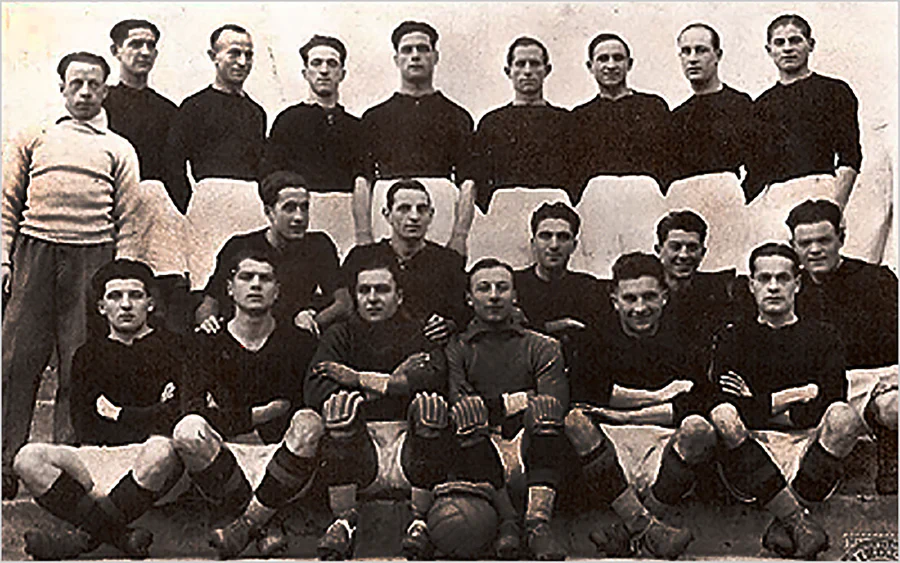
By the 1940s, Torino had assembled something transcendent. Il Grande Torino. The Great Torino.
They won Serie A in 1943, then again in 1946, 1947, 1948, and were on their way to a fifth consecutive title in 1949. They didn’t just win games, they dismantled opponents. Their average margin of victory in the 1947-48 season was over two goals. They scored 125 goals in 40 matches.
Ten of the eleven players on the Italian national team were from Torino. When Italy played international matches, they essentially fielded the Torino starting XI with one guest appearance.
Valentino Mazzola, the captain, was poetry in motion. A midfielder who could tackle, pass, shoot, and lead. He was 30 years old, in his prime, with a decade of dominance still ahead of him.
And then, on a foggy afternoon returning from a friendly match in Lisbon, the plane hit the hill.
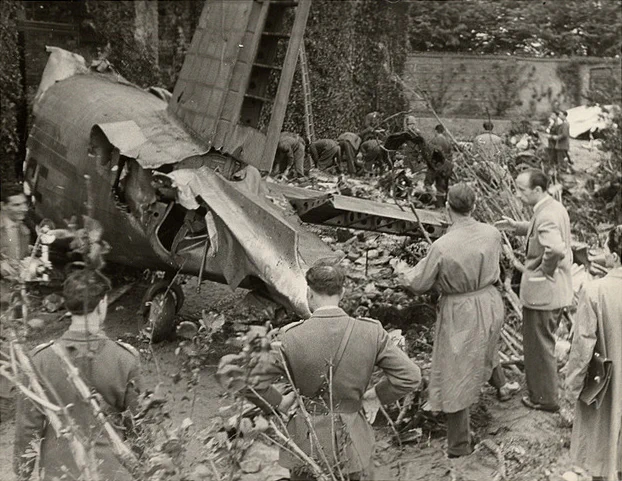
The Trauma
I’ve read newspapers of that day. The city shut down. Factories stopped production. People wept in the streets. The funeral procession stretched for kilometers. Half a million people, nearly the entire population of Turin, attended.
This wasn’t just the loss of a football team. It was the loss of hope. Post-war Italy was broken, hungry, humiliated. Torino had been the one thing that made people believe things could be beautiful again. And now they were gone.
Juventus offered to merge the clubs, to absorb Torino’s legacy into their own. It would have been the rational decision. The pragmatic choice.
Torino said no.
They rebuilt the squad from the youth academy and reserve players who hadn’t traveled to Lisbon. They finished the season using symbolic starting lineups, fielding the ghosts of the dead for the final four matches, with their opponents honoring them by fielding their youth teams.
Torino finished as champions. The scudetto was theirs, posthumously.
The Wilderness Years
What followed was decades of not quite.
Torino never returned to that peak. They won another scudetto in 1976 (their seventh and final), but it felt like an echo of glory rather than a resurgence. They spent the 1980s and 90s oscillating between Serie A and Serie B, fighting relegation battles, selling their best players to richer clubs.
In 2005, they were relegated to Serie B. Then, in 2009, they were relegated to Serie C, the third tier of Italian football. The club that had once dominated Europe was playing in front of 5,000 people in stadiums that smelled like piss and stale beer.
But here’s the thing: the fans never left.
The Granata didn’t abandon ship. They didn’t become Juventus supporters out of convenience. They packed the away sections. They sang in empty stadiums. They tattooed “Toro” on their ribs and arms and hearts.
Because being a Torino fan isn’t about winning. It’s about refusing to forget.
The Burden of Memory
Every year, on May 4th, Torino fans climb the hill to Superga. Thousands of them. They walk up the winding road in silence, carrying banners and scarves, and they stand before the memorial plaque where the plane crashed.
They sing. They cry. They remember.
This pilgrimage isn’t just nostalgia. It’s a contract with the dead. The message is clear: “We will carry your legacy. We will not let you be forgotten. We will not let this club die.”
Juventus fans don’t do this. They don’t need to. Their club never died. Their identity is built on accumulation, more trophies, more stars, more dominance. Torino’s identity is built on resistance, surviving, enduring, refusing to surrender.
The Aesthetics of Melancholy
There’s a strange beauty in Torino’s symbolism. The Granata color isn’t flashy. It’s deep, wine-dark, the color of old blood. Their crest features a charging bull, stubborn, fierce, wounded but refusing to fall.
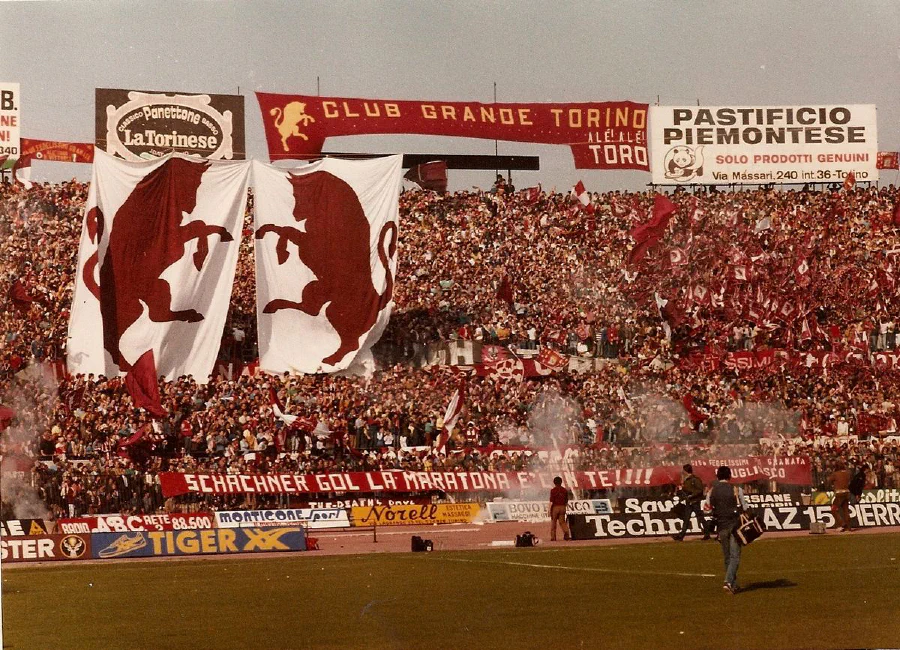
Even their stadium, the Stadio Olimpico Grande Torino, is bittersweet. It was built for the 1990 World Cup, a massive concrete bowl that seats 27,000 but rarely fills. On match days, the Granata faithful gather in the Curva Maratona, creating a wall of noise that echoes off the empty seats.
It’s haunting. And it’s perfect.
Because Torino’s identity isn’t about glory. It’s about defiance. It’s about showing up even when the world has moved on. It’s about loving something not because it’s easy, but because it’s yours.
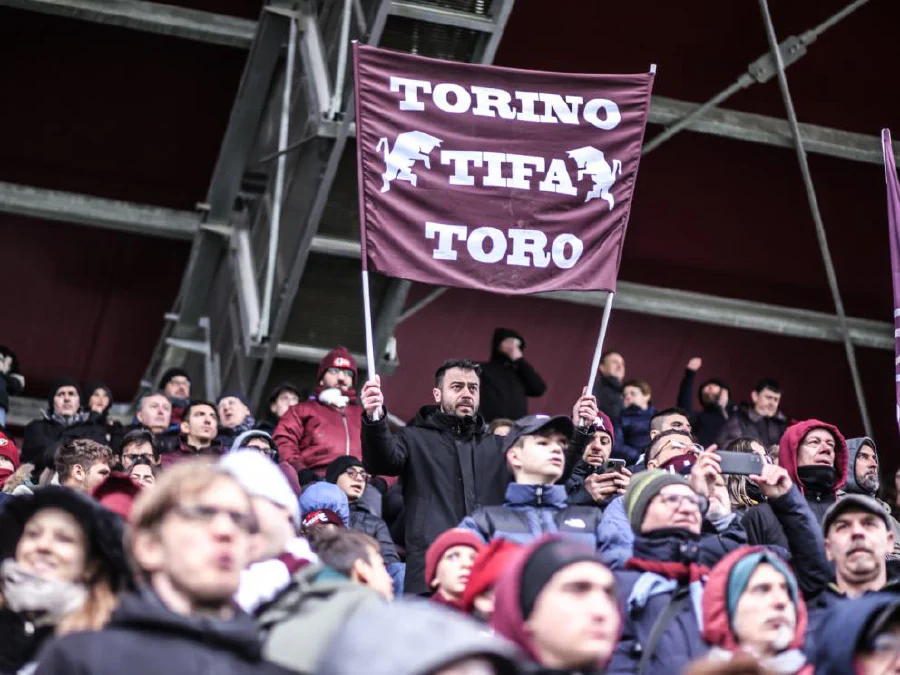
Here’s something that would have been unthinkable thirty years ago: Turin is becoming Torino’s city again.
Juventus still has more trophies. They still have Cristiano Ronaldo’s shadow lingering in their history books. They still have the corporate sponsorships and the global brand.
But walk through the streets of Turin today, and you’ll see something different. You’ll see Granata scarves in working-class neighborhoods. You’ll see murals of Il Grande Torino on the walls. You’ll see young people, kids who weren’t even born when Torino was in Serie C, wearing the bull with pride.
Juventus became a multinational corporation. Torino remained a community.
The Agnelli family (Juventus’s owners) moved the club to a sterile new stadium in the suburbs. Torino stayed at the Olimpico, in the heart of the city, where the metro stops and the trams run and the people live.
Juventus chases Champions League glory. Torino fights to stay in Serie A. And somehow, in that fight, they’ve become more real.
The Hope
I won’t lie to you. Torino will probably never win another scudetto in my lifetime. They’ll probably never challenge for the Champions League. They’ll probably continue to struggle financially, selling their best players to clubs with deeper pockets.
But here’s what they will do: they will survive.
They will continue to pack the Curva Maratona. They will continue to climb Superga every May. They will continue to sing “Toro Alé” until their voices crack.
Because being a Torino fan isn’t about what you win. It’s about what you refuse to lose.
The club died in 1949. But the identity, that stubborn, beautiful, maddening identity, lived.
And as long as there are people willing to wear the Granata and remember the fallen, as long as there are fans who choose the harder path over the easier one, as long as there are voices shouting “Sempre Toro” into the void, the club will never truly die again.
Turin belongs to Torino now. Not because they won it. Because they earned it.
Through pain. Through memory. Through refusal.
Forza Toro.