




Confeugo: The Vertical Flame of Genoa
“Bon sabbo à tutti! 🏴 !” (Happy Saturday, everyone!)
I recently moved to Italy, specifically to Liguria, where Genoa sits like a scarred sentinel watching over the Mediterranean. This afternoon, December 20th, I stood in the heart of the city to witness the Confeugo. It is a ceremony of fire, prophecy, and linguistic ghosts, and it forced me to look past the postcard version of Italy to something much more abrasive and real.
The Tribute of the Valleys
The Confeugo (from the Zeneize con + feugo, “with fire”) is a tradition dating back to the 14th century. It represents a symbolic “homage” from the surrounding valleys to the Doge of the Republic.
The center of the ritual isn’t a modern replica, but a massive bundle of laurel branches. In the old days, it was a large tree trunk, a gift to the city’s rulers. Today, that tribute is reenacted in Piazza De Ferrari through a scripted dialogue between the Abbot of the People (Abâ do Pòpolo) and the Mayor.
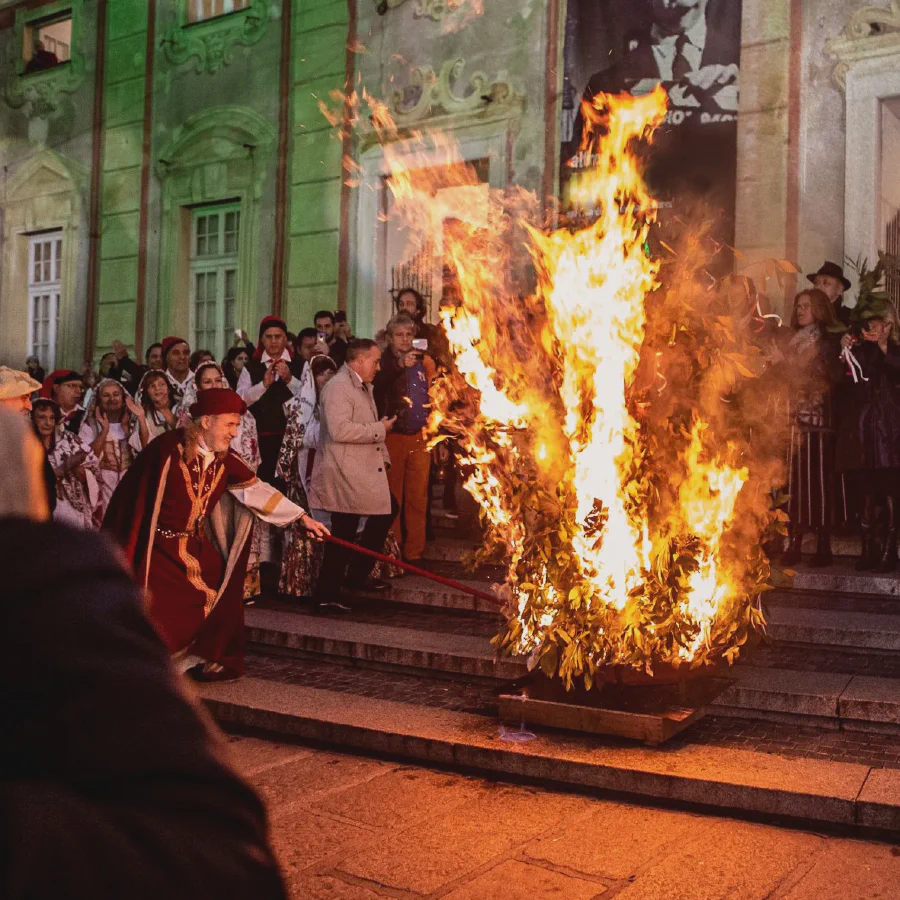
The exchange is performed entirely in Zeneize. To an outsider, and even to many younger locals, the language sounds like a rough, seafaring Portuguese mixed with French. It is the language of the Republic, and though UNESCO considers it endangered, here it is used as a formal, ritualistic tool to demand that the government listen to its people.
The Prophecy of the Flame
Once the pleasantries are exchanged, the Mayor gives the command, and the laurel is set ablaze.
I had initially expected a simple “white smoke for good, black smoke for bad” omen, similar to a Papal Conclave. But Genoese tradition is more exacting. The crowd doesn’t look at the smoke, they look at the direction of the fire.
A vertical flame: If the fire rises straight and tall, it signals a year of prosperity and “good winds” for the port.
A flickering or leaning flame: If the fire bows or struggles against the wind, the city prepares for hardship.
Tonight, as the laurel caught, the heat pushed the crowd back. Thousands of iPhones rose in unison, a shimmering sea of screens capturing a 14th-century superstition. It was a jarring sight: the ancient fire reflected in the glass of 2025 technology. Yet, as the flames began to lick upward, a strange hush fell over the piazza.
The flame rose straight.
The relief was palpable. It wasn’t the staged cheer of a tourist performance, but a collective exhale. Even in an era of economic indexes and satellite weather tracking, there is something deeply human about wanting the fire to tell you that you’ll be okay.
A Ghost Language in a Digital Age
It is easy to romanticize the use of Zeneize as an act of “defiance.” In truth, it feels more like an act of preservation. Most people around me couldn’t follow the nuances of the Abbot’s speech.
Genoa isn’t pretending the modern world doesn’t exist. The city is full of the same global chains and digital noise as anywhere else. But by standing in the cold to hear a language they barely speak and watch a fire they don’t “need,” the Genoese perform a vital function: they refuse to be anonymous. They choose to remember they were once a Republic that answered to no one but the sea.
2026: Looking Upward
I left Piazza De Ferrari with the scent of burnt laurel in my coat.
Genoa has survived plagues, bombardments, and the slow erosion of its maritime empire. It is a city that knows how to wait out the dark. Tonight, the ritual told us that 2026 will be a year of “straight flames.”
I don’t know if I believe in the prophecy of the laurel. But I do believe in the resilience of a people who, after six centuries, still gather to ask the fire for permission to hope.
I think I’m going to like living here.
Bon derê e bon prinçipio! (All the best for the end of the year and a great start to the new one!)
