



Borderless Bites: Is Italian Gastronomy Really All That?
If you asked me a few months ago what the pinnacle of the culinary world was, I would have answered without hesitation: Brazil and Spain. Being a Brazilian raised on Spanish soil, my palate was forged between the soul and abundance of Brazilian food and the impeccable technique and respect for produce that define Spain’s kitchens. I thought I had already seen and tasted the best.
But then life brought me to Italy. More specifically to Genoa, between the Ligurian Sea and the mountains, where the scent of fresh basil and focaccia coming out of the oven seems to permeate the city walls. And the burning question remains: is Italian gastronomy really everything people say it is?
The short answer is no, it is much more.
Before talking about my new home, I need to praise my roots. Brazilian gastronomy is an explosion of creativity and comfort. It is a cuisine that embraces you and mixes influences in a way that is unique in the world. As for Spain, well, Spain is the temple of the product. From tapas in Madrid to seafood in Galicia, it is a culinary style of love and passion. I still maintain that both countries are on the absolute podium of good eating.
The Italian Revelation
However, upon landing in Italy, I realized there is an extra layer. Here, eating well is not an event or a privilege. Eating well is a non-negotiable cultural pillar.
In Italy, food is the fabric that holds society together. It is not just about “eating something tasty” but about an almost religious respect for the ingredient and local tradition. In Genoa, I learned that Pesto is not just a sauce but a heritage. I learned that Focaccia is not bread but a morning, afternoon, and evening ritual.
What impresses me most on this new journey is the consistency. Frequently, in many places around the world, there is a gap between the “luxury” restaurant and the small corner tavern. In Italy, this gap does not exist in the way we know it.
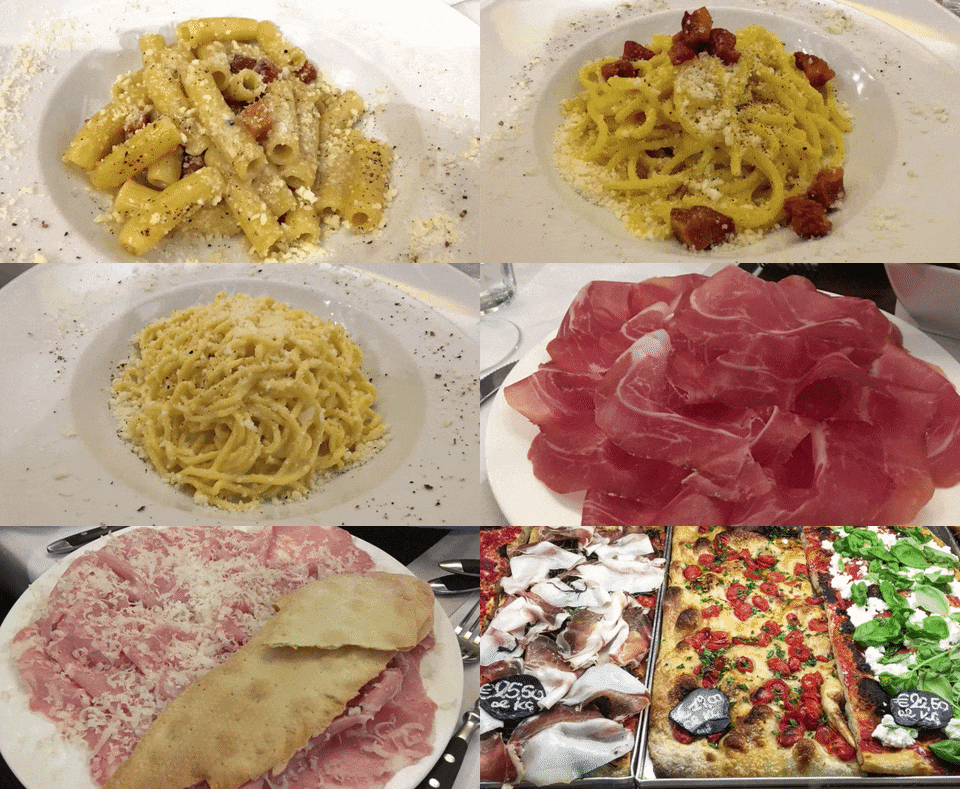
Whether in a simple “one star” trattoria (or even less than that, just a family counter hidden in a Genovese caruggio) or in a contemporary restaurant awarded five stars, the quality is exceptional. There is a minimum standard of dignity on the plate that is frighteningly high. The “simple” here is executed with a mastery that many renowned international kitchens struggle to reach.
The difference between the popular and the refined in Italy lies not in the quality of what reaches your mouth but in the complexity of preparation. The flavor, freshness, and pleasure of handmade pasta in a humble place compete on equal footing with the most exclusive experiences.
A Cultural Question
Living here made me understand that Italians do not “go out for dinner” just because they are hungry. They go out to celebrate their own existence through flavors. It is a national obsession that results in one of the highest densities of good food per square meter I have ever seen.
Italian gastronomy is indeed “all that.” It does not annul the greatness of what I experienced in Brazil or Spain, but it elevates the experience of sitting at the table to a level of existential priority.
If you have the chance, do not look only for the famous restaurant. Enter the little wooden door, ask for the dish of the day, and get ready because the Italian standard will change your perception of what it actually means to eat well.