




BASIC and the Architecture We Lost
You have probably walked past a brutalist building without knowing the style’s name. They are those raw concrete constructions, unplastered, where you can see the marks of the molds used in casting. Structure exposed. Piping sticking out. For a long time, computers were like this.
In the 80s, when you turned on a microcomputer (MSX, Apple II, or my personal favorite, the TK90x/ZX Spectrum), there was no desktop. There were no folder icons simulating an office. There was no metaphor at all. What appeared was a blinking cursor, waiting. The machine looked at you and asked: “What’s the plan for today, boss?”
And the language of this conversation was usually BASIC.
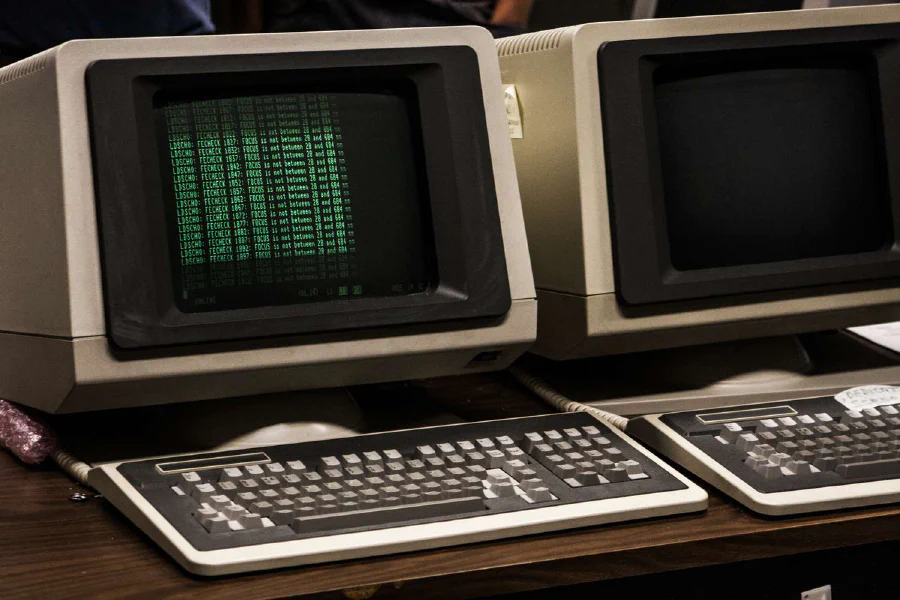
BASIC (Beginner’s All-purpose Symbolic Instruction Code) was not just a language, it was the operating system and the user interface fused into one thing. Today, we live in prefab houses with drywall walls (Windows, macOS, iOS). Everything is smooth, painted in pastel tones, safe, and above all, it hides the internal workings. Electrical wiring and plumbing are considered “ugly” and dangerous, hidden behind layers of graphical abstraction.
BASIC was pure brutalism.
When you typed 10 PRINT "HELLO WORLD!", you were not asking permission from a window manager, which would pass the request to a kernel, which would schedule the task on the GPU. You were throwing fresh cement onto the structure. The relationship was tactile. The line number (10, 20, 30) was not just syntactic organization, it was a spatial address in the program’s logic. The GOTO command, today demonized by computer science as the creator of “spaghetti code,” was actually an exposed hallway. It allowed you to see, and decide, exactly where the execution flow was going, without the politeness of encapsulated functions or object orientation.
But the true honest brutality of BASIC resided in two specific commands: PEEK and POKE. If BASIC is the exposed architecture, POKE was a sledgehammer. It allowed a 10-year-old child to write a value directly into a physical memory address of the computer. No sandboxing, no “protected mode,” no “administrator permission.”
Want to change the border color on your TK90x? You didn’t look for a “Settings” menu. You went to the manual, found the memory address controlling the video chip, and executed a POKE right there. You were altering the reality of the machine by hand. Was it possible to crash the computer hopelessly? Yes. Was it possible to make the machine emit a horrible screech and restart? Definitely. But the house was yours. If you wanted to break a load-bearing wall, BASIC handed you the sledgehammer and got out of the way.
This architecture formed a generation that understood that the computer is not magic, it is a manipulatable finite-state machine.By trading BASIC for friendly graphical interfaces, we gained productivity and aesthetics, but we lost structural literacy. Today, we are tenants in our own devices. Modern architecture is designed to prevent us from seeing the concrete. The “Syntax Error” was replaced by “Something went wrong :(”. The raw honesty of the logic error was replaced by the condescending kindness of a system that thinks you can’t handle the truth.
Maybe we don’t need to go back to typing line numbers or fighting with limited memory. But there is something in the philosophy of BASIC, the idea that the tool should be transparent and the user should have total sovereignty, even to make mistakes, that is sorely missing in our digital gated community.
Sometimes, it is healthy to see the concrete and exposed pipes, just to remember that the building stands on physics and logic, not magic.